If you are searching for what a swimming pool costs in Ontario in 2026, you are almost certainly trying to answer one question: what will I realistically pay, all in, to build and own a pool in my backyard this year? This guide gives you that answer in plain numbers. It covers the price of each pool type, the cost per square foot, smaller options like plunge and spool pools, a full component-by-component breakdown, the 2026 building code and permit rules that affect your project, ongoing yearly costs, and practical ways to save.
Quick Answer:
In 2026, an inground pool installation in Ontario costs roughly $60,000 to $350,000+ for the pool itself, with most pool installations starting at about $60,000. Once you add the heater, fencing, decking, and landscaping a finished backyard oasis needs, most homeowners spend $350,000 to $500,000 for a concrete build, $340,000 to $540,000 for an ICF build, $120,000 to $250,000 for vinyl, and $150,000 to $250,000 for fiberglass. Smaller plunge and spool pools start lower, from about $60,000 to $150,000, and budget-minded buyers sometimes compare these against above-ground pools.
How Much Does a Pool Cost by Type in Canada, Ontario?
The material you choose is the biggest single driver of cost. Each pool type has different prices, timelines, lifespans, and maintenance profiles, so weigh the trade-off between upfront cost and long-term value before you commit.
| Pool Type | 2026 Install Cost | Lifespan & Notes |
|---|---|---|
| Concrete (gunite) | $200,000 – $350,000 | Fully custom; longest lifespan; longest build |
| ICF pools | $190,000 – $340,000 | Concrete strength plus built-in insulation; energy-efficient |
| Vinyl liner | $85,000 – $135,000 | Lowest entry cost; liner replaced every 7–10 yrs |
| Fiberglasspools | $90,000 – $150,000 | Fast install; low maintenance; fixed shell sizes |
Concrete (Gunite) Pools
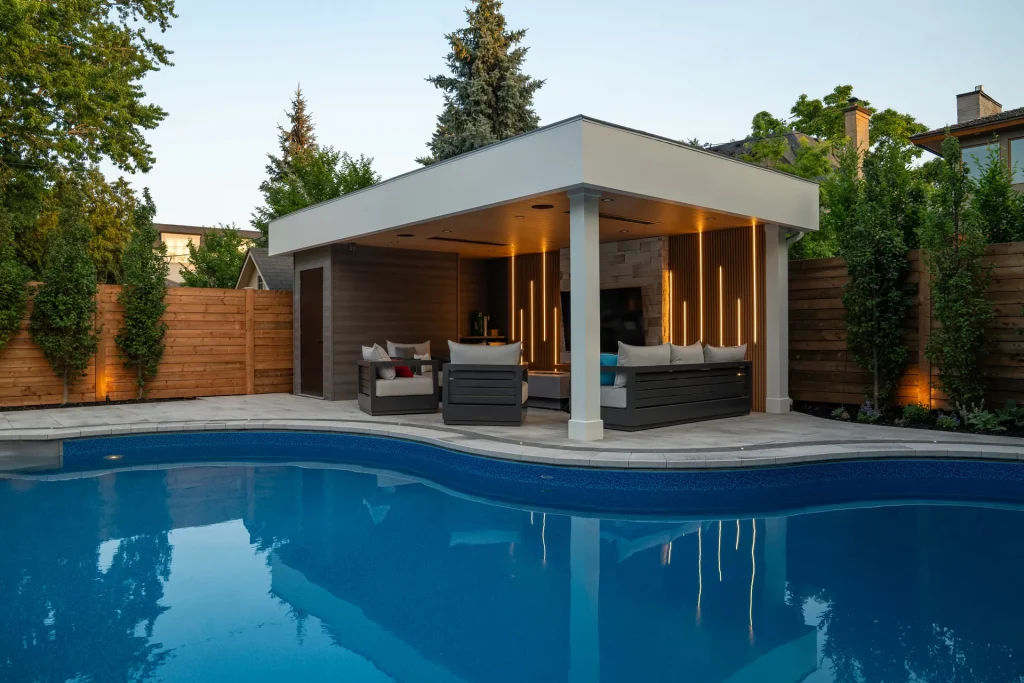
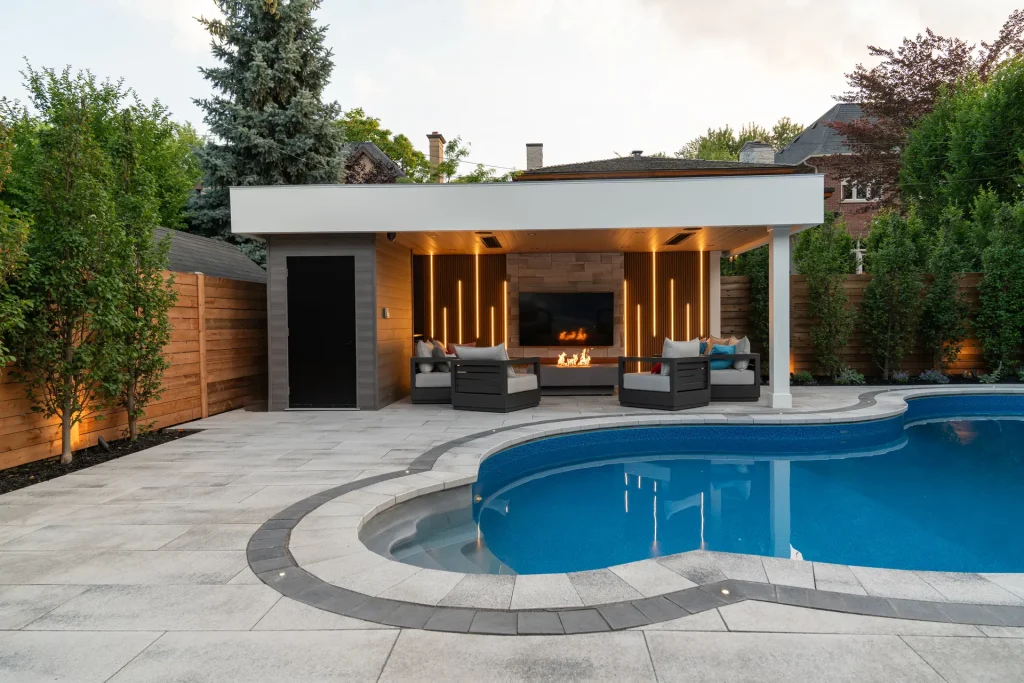
Concrete pools are fully custom in any size, shape, or depth, and that design freedom lets you add tanning ledges, vanishing edges, and attached spas. They are the most durable and can last decades, but the cost is the highest, and the build runs two to three months. With quality landscaping, they reach well into six figures, and resort-style designs run $350,000 to $500,000 or more — the premium choice for full control over the pool structure. Labour alone typically runs $40,000 to $200,000.
ICF Pools
ICF (insulated concrete form) pools combine concrete’s structural strength with built-in insulation, so they match concrete’s durability while improving energy efficiency and reducing your hydro bill. Interior finishes are similar to concrete — usually marbelite or a vinyl liner — and the build runs about two to four weeks. Cost is comparable to custom concrete, at $340,000 to $540,000+, making ICF a strong pick for concrete-level performance with lower long-term heating ownership costs. Labour alone typically runs $40,000 to $200,000.
Vinyl Liner Pools
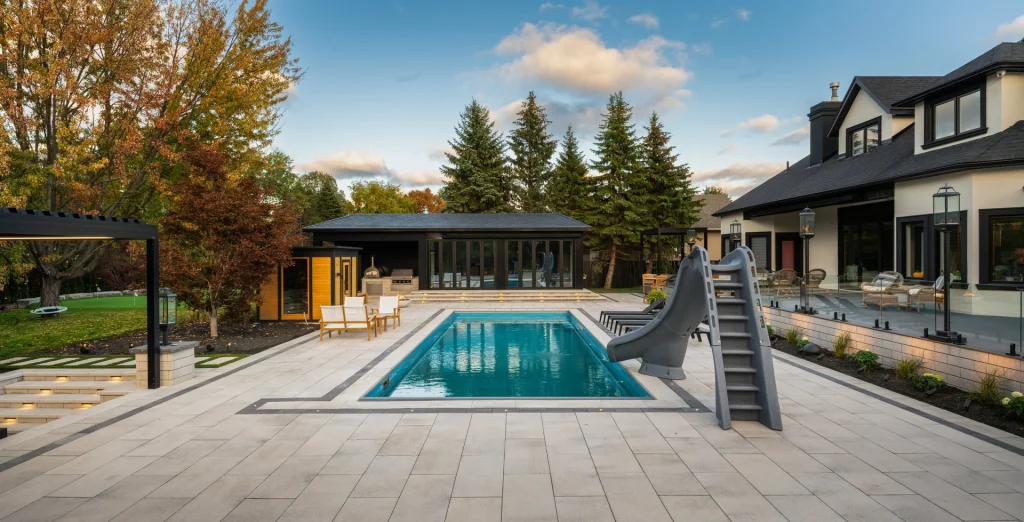
Vinyl-liner pools are the most affordable route to a true inground pool and the most common choice in Ontario. They allow flexible shapes, have a smooth surface, and often include built-in steps. The trade-off is the liner, a wear item replaced every 7 to 10 years at $8,000 to $15,000. A standard 14-by-28-foot vinyl pool often lands around $125,000 once basic surroundings are included, though the final price depends on size and features. Labour alone typically runs $30,000 to $80,000.
Fiberglass Pools
Fiberglass pools arrive as a single pre-molded shell, so installation is fast — often a couple of weeks. The gel-coat surface resists algae and needs fewer chemicals, lowering long-term ownership costs. The limit is customization: fiberglass shells are factory-made in set sizes, generally up to about 14 by 28 feet. A pool that size typically lands at $150,000 to $250,000 finished — hard to beat for a quick, low-maintenance dream pool if a standard size fits. Labour alone typically runs $40,000 to $100,000.
Smaller and Lower-Cost Pool Options
If your yard or budget is tight, smaller pool styles deliver much of the experience for less and are popular on Ontario’s urban lots — a common middle ground between a full inground swimming pool and above-ground pools.
- Small inground pools: A compact vinyl pool can start below a full custom build, fiberglass runs about $75,000 to $100,000, and a small custom concrete pool can still reach $150,000+. Most builders quote these as scaled-down versions of their standard pool size.
- Plunge pools: Usually 10 to 20 feet long and about 5 feet deep, for cooling off rather than swimming laps. In Ontario they generally cost $60,000 to $80,000+ installed, depending on depth, heating, and hardscape.
- Spool pools (spa + pool hybrid): A small heated pool with jets and seating. Spools average around $150,000 to $250,000 installed, depending on features.
Full Cost Breakdown: What Goes Into the Price
A base price quote usually covers excavation, the pool structure, plumbing, electrical work, and basic coping. The items below are often quoted separately and turn a pool shell into a finished, code-compliant backyard. Budgeting for these add-ons upfront is the best way to avoid surprises and understand your final price.
| Component | Typical 2026 Cost | Notes |
|---|---|---|
| Pool shell / structure | Varies widely — quoted per project | Depends heavily on material, size, and site conditions |
| Gas heater | $5,000 – $7,000 | Heats quickly; higher running cost |
| Electric heat pump | $7,000 – $10,000 | Most energy-efficient to run |
| Fencing / enclosure | $4,000 – $15,000 | Required by law; 1.5 m non-climbable |
| Decking | Quoted per project | Pavers give a premium finish; poured concrete is more budget-friendly but can crack in freeze-thaw winters |
| Landscaping / hardscaping | $5,000 – $30,000+ | Typically 15–25% of overall budget |
| Safety cover (manual) | $8,000 – $12,000 | Manual open/close |
| Automatic cover | $4,000 – $15,000 | Switch-operated; added safety |
| Permits & fees | $2,000 – $3,000 | Building + fence enclosure permits |
Pool heaters are among the most common add ons: a gas heater warms water fastest, while a heat pump is the most efficient to run. Other popular extras include water features, lighting, fire pits, and retaining walls.
What Raises or Lowers Your Price
Two similar pools can differ by tens of thousands of dollars, varying depending on several factors — with soil conditions and access often the biggest swing items.
- Soil and excavation: Heavy clay across southern Ontario needs specialized equipment. Disposal runs $40 to $80 per cubic yard, and a typical pool removes 200 to 400 cubic yards, adding $8,000 to $32,000. High water tables can require extra drainage.
- Property access: Narrow side-yards, existing fences, property lines, or no laneway access force small equipment and more hand-digging, raising labour.
- Size, depth, and shape: Larger pools mean more excavation, material, and a bigger shell. Custom shapes add cost, especially in concrete. Pool size is a clear driver of the base price.
- Add-ons and features: Heaters, automation, lighting, water features, and saltwater systems each raise upfront and ongoing cost.
- Location and demand: GTA and high-demand markets run higher than smaller towns due to labour costs, increased demand, and tighter lots.
2026 Permits, Building Code, and Regulations
Pools are regulated in Ontario, and recent changes affect both cost and timeline. Confirm local building codes from the start.
- Updated Ontario Building Code: The 2024 code took effect January 1, 2025 (grace period to March 31, 2025), with more than 1,700 amendments — confirm current requirements with your municipality.
- Permits required: A building permit, zoning certificate, and pool fence enclosure permit are needed before construction. Permit fees generally range from $500 to $1,500.
- Fence and safety standards: Enclosures must be at least 1.5 metres high, non-climbable, with self-latching gates. Temporary fencing is required during construction.
- Toronto 2026 fee increase: Effective January 1, 2026, Toronto raised pool fencing and enclosure permit fees by about 4.82%.
- Zoning changes: Toronto now treats pools more like hardscaping, so more homeowners need a minor variance, adding time and cost.
Ongoing Cost of Owning a Pool
The build is only part of the investment. Pool ownership comes with annual and periodic costs, so budget for them up front.
| Ongoing Cost | Typical 2026 Range |
|---|---|
| Total annual maintenance | $1,200 – $2,500 / year |
| Chemicals – chlorine system | $600 – $960 / year |
| Chemicals – saltwater system | $240 – $480 / year |
| Energy & heating | $1,200 – $2,000 / year |
| Spring opening | $150 – $350 |
| Winterizing / closing | $200 – $450 |
| Salt cell replacement (every 3–7 yrs) | $400 – $700 |
| Vinyl liner replacement (every 7–10 yrs) | $4,000 – $7,000 |
Saltwater systems cost more upfront but lower yearly chemical spending and feel gentler, while chlorine systems are cheaper to install but need more frequent chemical balancing. An electric heat pump is the most economical way to heat over a full season and kindest to your hydro bill; a gas heater warms fastest. Seasonal opening and closing are predictable line items.
How to Save: Timing and Financing
- Build in the off-season: Fall is the best value. Demand drops after summer, so builders and your local dealer often discount materials, heaters, fencing, and labour, and booking then secures an earlier spring slot.
- Compare itemized quotes: Get a free estimate from several licensed builders and make sure each lists excavation, permits, fencing, heater, decking, and landscaping, so you compare true all-in installation costs.
- Phase the project: Install the pool and essential fencing first, then add decking, landscaping, or an automatic cover later to spread the cost.
- Financing: A home equity line of credit (HELOC) is common for its flexible rates, and unsecured renovation loans are another option. Some builders coordinate financing partners directly.
Which Pool Type Is Right for You?
For a one-of-a-kind backyard with full design freedom over shape, depth, and features, concrete is the premium choice. ICF pools offer that same strength with built-in insulation, suiting homeowners who want durability and lower heating costs. If upfront cost matters most, vinyl is the entry point, with liner replacement as the trade off. And for a quick, low-maintenance build in a standard size, fiberglass is hard to beat. An experienced team can match the right pool type to your yard. Think in total cost of ownership, not sticker price — a cheaper pool may carry higher maintenance costs over time.
Does a Pool Add Value to Your Home?
A well-designed, well-maintained pool can add appeal and property value in the right market, especially in family-oriented neighbourhoods. Even so, treat a pool as a lifestyle investment and one of the more enjoyable home improvements rather than a guaranteed return. Quality construction, compliant fencing, and clean landscaping help it read as an asset and support resale value rather than a future expense.
Planning Your Pool Budget
A swimming pool is a major investment, and the smartest way to protect it is to budget for the complete picture rather than the base quote alone. Account for your soil and site conditions, permits and fencing, the features that make the pool enjoyable, and the yearly cost of running it.
With realistic numbers in hand, you can compare builder quotes with confidence and avoid mid-project surprises. When you are ready, request detailed, itemized quotes and a free estimate from a licensed Ontario pool builder and ask each to spell out exactly what is included, so you are comparing true all-in pricing and choosing the right pool for your yard and budget.
Frequently Asked Questions
How much does an inground pool cost in Ontario in 2026?
Most inground pool costs run $60,000 to $350,000+ for the pool itself. With a heater, fence, decking, and landscaping, the realistic all-in budget typically lands between $120,000 and $540,000 depending on the pool type and size.
What is the cheapest type of inground pool?
Vinyl liner pools have the lowest upfront cost, with pool installation starting around $60,000. Factor in liner replacement every 7 to 10 years at $4,000 to $7,000.
How much is a small or plunge pool in Ontario?
Small inground pools are quoted as scaled-down builds and can start below a full custom pool. Plunge pools generally cost $60,000 to $80,000+ installed, while spool (spa-pool hybrid) units generally run $150,000 to $250,000 installed.
How long does it take to build a pool?
Fiberglass pools can be installed in about a week because the shell is pre-made. Vinyl pools take a few weeks, and concrete builds commonly run two to three months, not counting permit and inspection time.
Do I need a permit to build a pool in Ontario?
Yes. A building permit, zoning certificate, and pool fence enclosure permit are required before construction. Permit fees generally range from $500 to $1,500, and fencing must meet the 1.5-metre non-climbable standard.
Did the building code or rules change for 2026?
The 2024 Ontario Building Code took effect January 1, 2025, with broad amendments. In Toronto, pool fencing and enclosure permit fees rose about 4.82% on January 1, 2026, and the city has started requiring minor variances for more pool projects under updated zoning treatment. Always confirm current local building codes with your municipality.
How much does it cost to maintain a pool each year?
Plan for $1,200 to $2,500 per year in total maintenance, plus $1,200 to $2,000 in energy and heating. Opening and closing services add a few hundred dollars each spring and fall.
When is the cheapest time to build a pool?
Fall is usually the best value. Demand drops after summer, so builders and suppliers often discount materials and labour, and booking then can secure a better price and an earlier spring build slot.
What is the most energy-efficient way to heat a pool?
An electric heat pump is typically the most economical to run over a full Ontario season, delivering several units of heat per unit of electricity. Gas heaters warm water the fastest but cost more per hour to operate, and solar heating is cheap to run but depends on sun exposure.